
Key Points
CRA’s TFSA room display can lag, and redepositing the same-year withdrawal can create an overcontribution until next January. Over contributions are taxed at 1% per month on the highest excess amount, so a $7,000 mistake costs $70 monthly. Track your own TFSA deposits and withdrawals first, then invest confirmed room in steadier names like Hydro One. The most dangerous number in a Tax-Free Savings Account (TFSA) may be the one labelled “available contribution room.” It looks official, reassuring, and wonderfully specific. Unfortunately, it can also be months behind reality while an accidental over contribution begins collecting tax immediately.
The cost
The nastiest trap appears after a withdrawal. Suppose an investor has already maxed out their TFSA, withdraws $7,000 for a renovation, then changes their mind and deposits it again in August. That withdrawal doesn’t create new room until January 1 of the following year, making the entire redeposit an excess contribution. Checking the CRA account first may not prevent the mistake. Current-year contributions aren’t added immediately, while previous-year TFSA records are generally processed by April. The CRA specifically tells Canadians to calculate their room using their own financial records rather than relying solely on the displayed figure. That warning becomes expensive remarkably quickly. The CRA charges 1% of the highest excess amount for every month an overcontribution exists. There’s no $2,000 grace amount, and withdrawing the excess later in the same month doesn’t erase that month’s tax. A $7,000 mistake therefore costs $70 each time the calendar flips.
Growth on growth
Here’s what happens if a maxed-out investor replaces a $7,000 withdrawal without unused room and leaves the excess until January, when that withdrawal finally returns as new room.
RECONTRIBUTION MONTH MONTHS TAXED MONTHLY TAX TOTAL EXCESS TAX August 5 $70 $350 October 3 $70 $210 December 1 $70 $70
By the time the CRA sends a notice, the excess may have spent several months cheerfully producing a tax bill nobody invited. Anyone who discovers an overcontribution should withdraw it immediately and file the required TFSA return. The CRA can waive or cancel tax resulting from a reasonable error when the investor corrects it without delay, although relief remains discretionary. Prevention is considerably cheaper than writing Ottawa a persuasive apology.
Track first, then invest
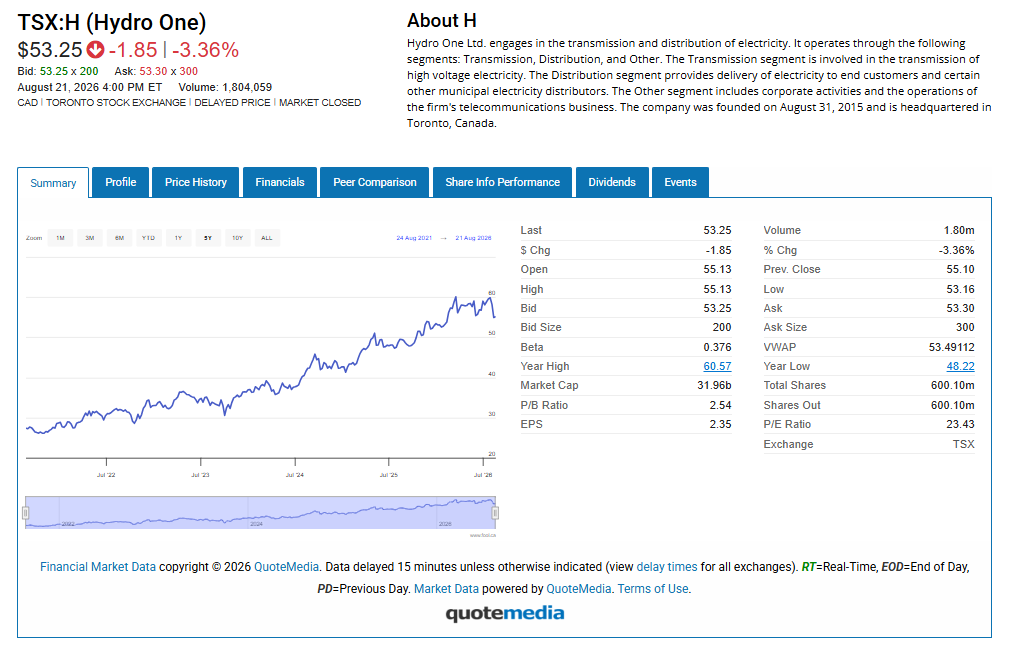
The solution isn’t avoiding contributions. It’s keeping one record covering every TFSA, including current-year deposits and withdrawals. Unused room carries forward, withdrawals return the following calendar year, and investment growth inside a TFSA doesn’t consume additional room. Once that room is confirmed, Hydro One (TSX:H) offers a defensive place to use it. The company operates Ontario’s largest electricity transmission and distribution network, serving approximately 1.5 million customers. People may postpone replacing a sofa. Turning off the refrigerator until markets improve is considerably less popular. Hydro One’s second-quarter earnings per share increased approximately 15% year over year to $0.62, supported by approved rates and higher peak electricity demand. The company is also advancing several transmission projects as Ontario requires more capacity for population growth, manufacturing, and electrification. That regulated expansion has supported a growing dividend. Hydro One raised its quarterly payment by 6% to $0.35 this year, producing an annualized dividend of $1.41. At the recent price of $56.75, a verified $7,000 contribution would purchase 123 full shares and generate approximately $173.73 annually.
Bottom line
Hydro One trades near 22.5 times trailing earnings and yields approximately 2.5%, so it isn’t sitting in the bargain aisle among Canadian utility stocks. Its capital program requires substantial borrowing, while higher financing costs, construction delays, or unfavourable regulatory decisions could slow earnings growth. Future dividends aren’t guaranteed. The CRA account remains a useful checkpoint, not a live spending limit. Investors who track their own room can avoid paying tax on an account designed to prevent it, then leave Ontario’s expanding electricity network producing dividends instead of sending $70 monthly reminders to Ottawa.